
The new Luzz Cannon XPP just launched today, and I have had the pleasure of testing it out these past couple of weeks to give you the low down.
In addition, I like to compare paddles to other paddles to help you understand playability to some common comparisons, so I would like to compare how the Cannon XPP played compare to the Canon, Spartus Spitfire, Friday Aura Pro, and Pakle Fuse. Some of these paddles are in the $100 range, but the Friday Aura Pro and Cannon XPP are priced similarly, so it could be a helpful comparison point.
Let’s begin with first impressions of the new Cannon XPP, the playability differences, cost considerations and which paddle I would choose.
First Impressions.
The first thing that sticks out differently from the new Cannon XPP to the Gen 3 Cannon is the paddle’s grit. The XPP’s carbon fiber face incorporates green silicon carbide grit for strong ball bite and top-tier wear resistance.
It feels super gritty and reminds me a lot of the Honolulu J6CR and J2CR crystal blue. On face value, I would say that the XPP feels grittier than the Spitfire, Pakle Fuse and Aura Pro as well.
That is saying something because the Spitfire has one of my favorite spin surfaces. Spartus uses its PermaGritNano surface, and when I previously reviewed the paddle, spin was one of the things that immediately stood out to me.
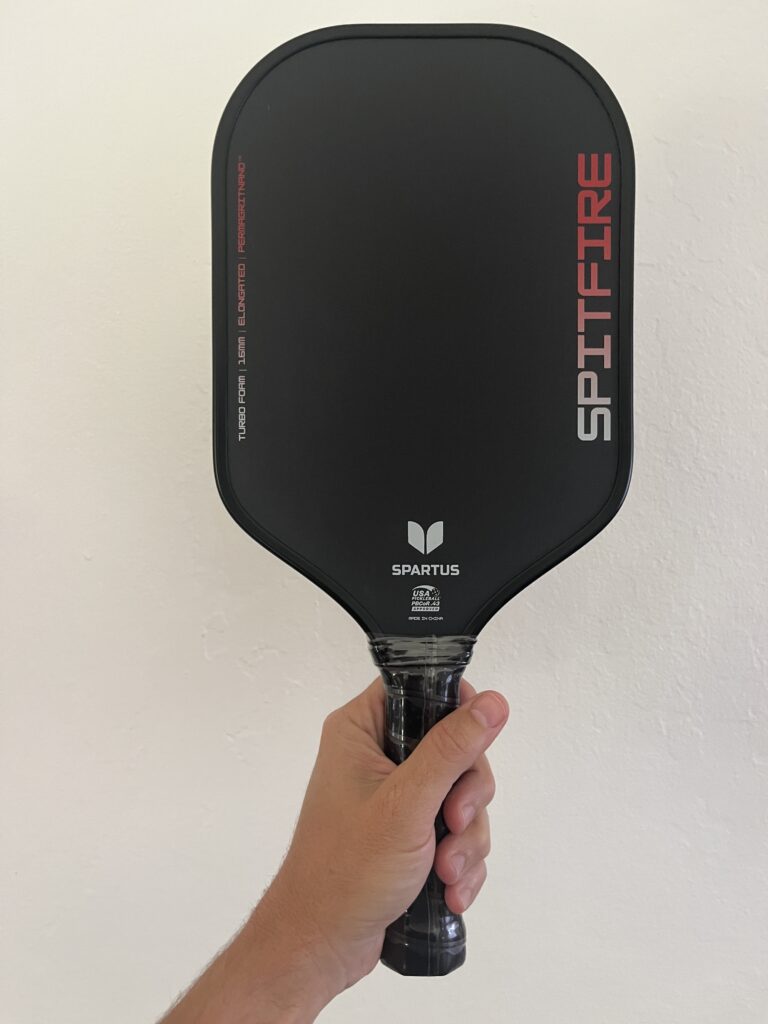
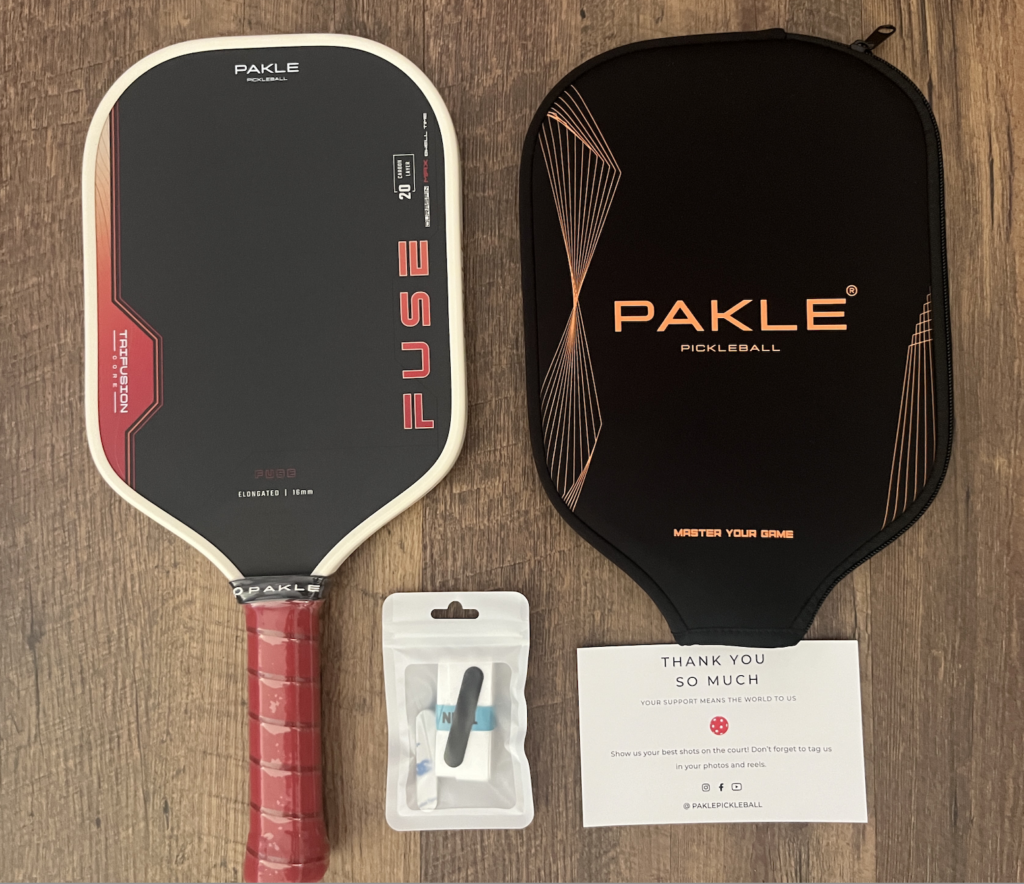
The Pakle Fuse also has a noticeably gritty surface, but the Cannon XPP feels a little more aggressive to the touch.
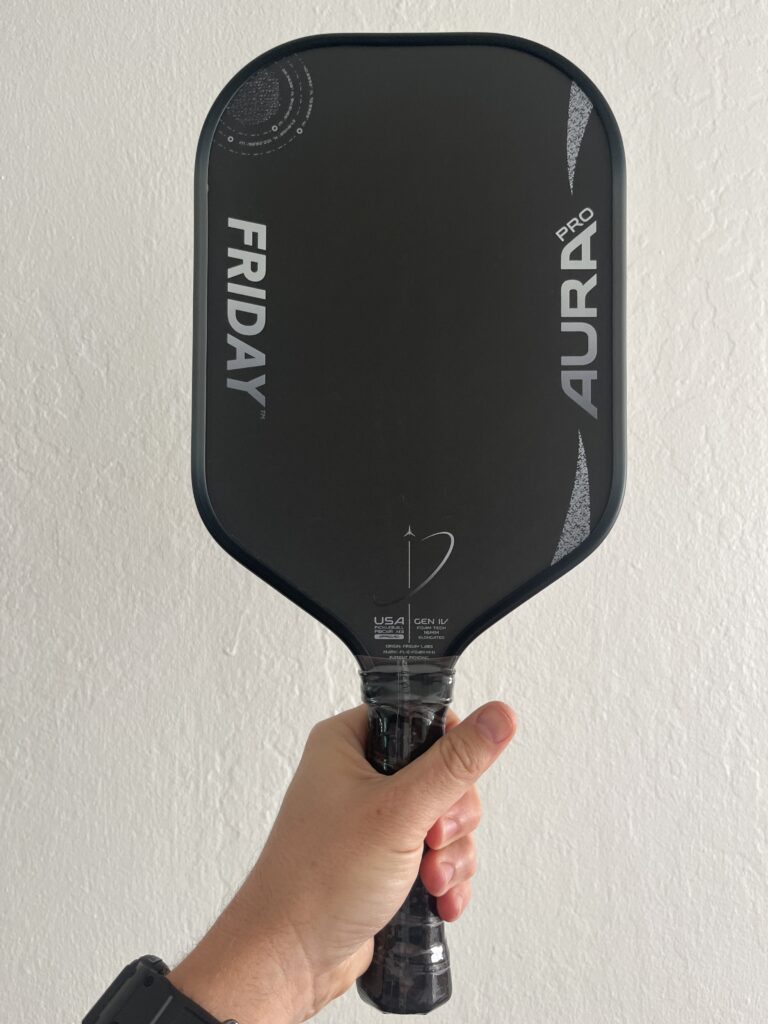
The Aura Pro has good grit as well, although I previously described the Friday Aura and Aura Pro as having slightly above-average grit rather than something that immediately feels extreme.
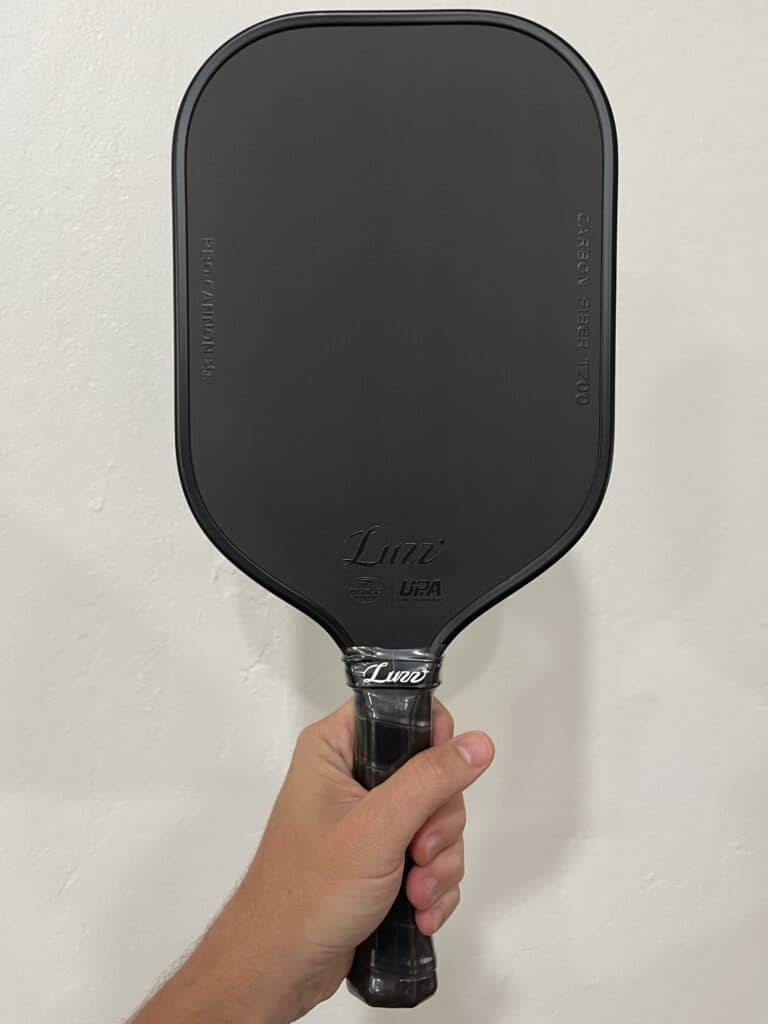
The original Cannon sits on the other end of this comparison. It has a T700 carbon fiber surface and produced plenty of spin for me, but the XPP immediately feels like LUZZ has taken the surface technology to another level.
Let’s talk about the playability next because that’s where things get super interesting.
Playability
One major thing I was curious about is the Luzz’s new proprietary XPOP modified EPP foam core. Luzz states that it’s built to deliver a lively, powerful response for hard drives, fast speed up and decisive overheads.
The interesting thing is that this did not feel like one of those power paddles where I needed several games to figure out how hard I could swing. In my first game, I immediately noticed the power, but I also felt surprisingly comfortable controlling it.
That is what made the Cannon XPP stand out to me.
Power
The Cannon XPP has a lot of power.
In my first game with it, I could immediately tell that the ball was leaving the paddle faster than with the original Cannon. On serves, drives, overheads, and attacking balls around the kitchen, it had that extra gear where I did not have to manufacture all of the speed myself.
What surprised me more was how usable that power felt. I have played with several ultra-powerful paddles where the first couple of games involve learning how much to take off the ball, and I really did not have that same adjustment period with the XPP.
The Pakle Fuse comes very close in this category. When I reviewed it previously, I described the Fuse as having the most immediate and explosive response in that group, particularly on serves, counters, overheads, and full drives.
The difference for me is that the Fuse can be a little more demanding. Slightly mistimed drives and counters can launch long, while the Cannon XPP gave me a similar feeling of easy power without quite as much of that unpredictable launch.
The Aura Pro comes next. I have always considered the Aura Pro to be a really well-balanced power paddle because it gives you noticeably more pace than the standard Aura without becoming uncontrollable.
The Spitfire also has plenty of power, but it feels a little more connected to your swing. You can absolutely attack with it, but I think of the Spitfire as more of a power-and-spin paddle than an all-out pop paddle.
The original Cannon finishes fifth here. That may sound strange because the Cannon certainly is not underpowered, but compared to this group it feels much more like controlled power.
Here’s my power ranking:
- Luzz Cannon XPP
- Pakle Fuse Elongated
- Friday Aura Pro
- Spartus Spitfire
- Cannon Gen 3
Spin
Spin may be the most impressive thing about the Cannon XPP.
The green silicon carbide grit is immediately noticeable, and I could see the results on the court. On several shots, I could actually watch the ball hit the ground and jump around a foot after the bounce.
My topspin serves were jumping higher than usual, and my sidespin serves were creating awkward returns. On full drives, I could swing aggressively and still bring the ball down because the surface was grabbing the ball so effectively.
That is where the XPP reminds me of paddles like the Honolulu J6CR and J2CR Crystal Blue. It has that incredibly gritty surface where you can almost feel the paddle grabbing and redirecting the ball.
LUZZ says the silicon carbide surface is designed both for aggressive ball bite and wear resistance. The durability part will obviously take longer to fully judge, but from an initial spin standpoint, I think this is one of the better surfaces I have played with.
The Spitfire comes in second for me. I previously ranked the Spitfire at the top of a comparison group for spin because its PermaGritNano surface gave me excellent bite on topspin serves, dipping drives, and roll volleys.
The Pakle Fuse is also a very good spin paddle. Its DuraSpin surface gave me enough grip that I could pair its explosive power with topspin and keep aggressive shots in the court.
The Aura Pro also produces really good spin, and I found both the Aura and Aura Pro capable of producing heavy topspin and slice. That said, the surface itself never felt quite as aggressive as the XPP or Spitfire.
Finally, the original Cannon has good spin, but this is probably the category where the XPP feels like the clearest upgrade. The original Cannon was already a solid T700 paddle, but the XPP’s surface gives me considerably more confidence when I am trying to aggressively shape the ball.
Here’s my spin ranking:
- Luzz Cannon XPP
- Spartus Spitfire
- Pakle Fuse Elongated
- Friday Aura Pro
- Cannon Gen 3
Control
Control is where the comparison gets a little more interesting because the Cannon XPP is definitely not designed as a control-first paddle.
LUZZ even says that the XPP puts power and spin first. Because the rebound is so lively, they note that dinks, blocks, and defensive resets require a softer touch to control the ball’s height and depth.
I agree with that, but I was pleasantly surprised by how controllable it was.
The first time I used the XPP, I expected a longer adjustment period because of how much power was coming off the face. Instead, I felt comfortable relatively quickly, and I did not have the same number of balls flying long that I sometimes experience when I first pick up an ultra-power paddle.
I would describe it as controllable pop.
The Spitfire takes first place for me here. Even though it is a power-oriented paddle, I have always felt that it gives me a nice combination of stability, dwell time, and predictable ball response. In my prior review, I found it much easier to trust on full swings than some of the more explosive foam paddles.
The Friday Aura Pro comes next. It has noticeably more power than the regular Aura, but it still maintains the softer, more forgiving characteristics that make Friday paddles easy to play with.
When I previously compared the Aura Pro against the Aura, I specifically noted that I did not feel like I sacrificed control in the way I have with some other power paddles.
I would put the Cannon XPP third. It is not as soft or forgiving as the Spitfire or Aura Pro, but it performed considerably better in the control category than I expected given how much power it has.
The Fuse comes fourth because it takes a little more discipline. It is a very fun paddle once you adjust, but passive blocks and slightly mistimed drops can launch farther than expected because of the fast energy return.
The original Cannon finishes fifth in this particular group based on my current comparison, although I have historically considered it a very balanced paddle. When I originally reviewed the Cannon, I actually liked the 16mm construction specifically because of its plush feel and dwell time on resets and thirds.
- Spartus Spitfire
- Friday Aura Pro
- Luzz Cannon XPP
- Pakle Fuse Elongated
- Cannon 1 Gen 3
Cost Considerations
The new Luzz XPP is $179 before the discount code, but with 15% BEPICKLEBALLER discount code the paddle comes down to $152.15.
That makes the Cannon XPP considerably more expensive than the original Cannon. The current Cannon starts at $109, so the same 15% discount would bring the standard version down to around $92.65.
The question becomes whether you are willing to pay more for the new XPOP foam core, much more aggressive silicon carbide grit, increased pop, and what LUZZ is positioning as a more durable spin surface.
The Spartus Spitfire remains one of the best values in this comparison at $109.99. That is especially impressive because it provides a full foam construction, excellent spin, and a very balanced playing profile
The Pakle Fuse currently sits around $119 depending on the version, which also puts it firmly in the value category. Code BEPICKLEBALLER takes this paddle down to $99.
The Friday Aura Pro retails for $169, and the BEPICKLEBALLER code takes $10 off, bringing it to around $159. That makes it the closest direct price comparison to the Cannon XPP.
Which Paddle Should You Choose?
If you want the most complete combination of power and spin in this group, I would choose the Luzz Cannon XPP.
What surprised me most is not necessarily that it has the most power or that the grit is extremely aggressive. The biggest surprise is how quickly I felt comfortable using all of that performance.
I absolutely loved the Cannon XPP. It felt like an all around package for me.
That said, I don’t think the XPP is automatically the best paddle for everyone.
Choose the Spartus Spitfire if you prioritize control and spin and want one of the best values in the group. It does not give you quite as much outright power as the Cannon XPP, but it is a paddle I trust on almost every type of shot.
Choose the Friday Aura Pro if you want a premium power paddle but still want a softer, more forgiving response. It gives up some spin and power compared to the XPP, but I think it will be easier for players who prioritize consistency in doubles.
Choose the Pakle Fuse if your primary goal is raw power. It is still one of the most explosive paddles I have tested, although I think the Cannon XPP combines that aggressive personality with better spin and a shorter adjustment period.
Choose the original Cannon if value is your priority.
At roughly $93 after the 15% discount, it is significantly cheaper than the XPP. You lose some of the extreme grit and explosive foam response, but it remains a very capable paddle with solid power, spin, and control. The original Cannon currently starts at $109.
Leave a Reply