
This article may contain links that help support this website.
11six24 recently released the new Jelly Bean 2 paddles, and I was extremely excited to get my hands on them to test and review them before before they launch tomorrow (August 21, 2026). I loved the original Jelly Bean paddles. At one point, I actually owned all three versions of the original Jelly Bean lineup, and I thought they were some of the best-value paddles you could buy.
So when 11six24 announced the Jelly Bean 2 series, my question was pretty simple: Are these just fun-looking value paddles, or are they actually good enough to compete with the more expensive Power 2 series?
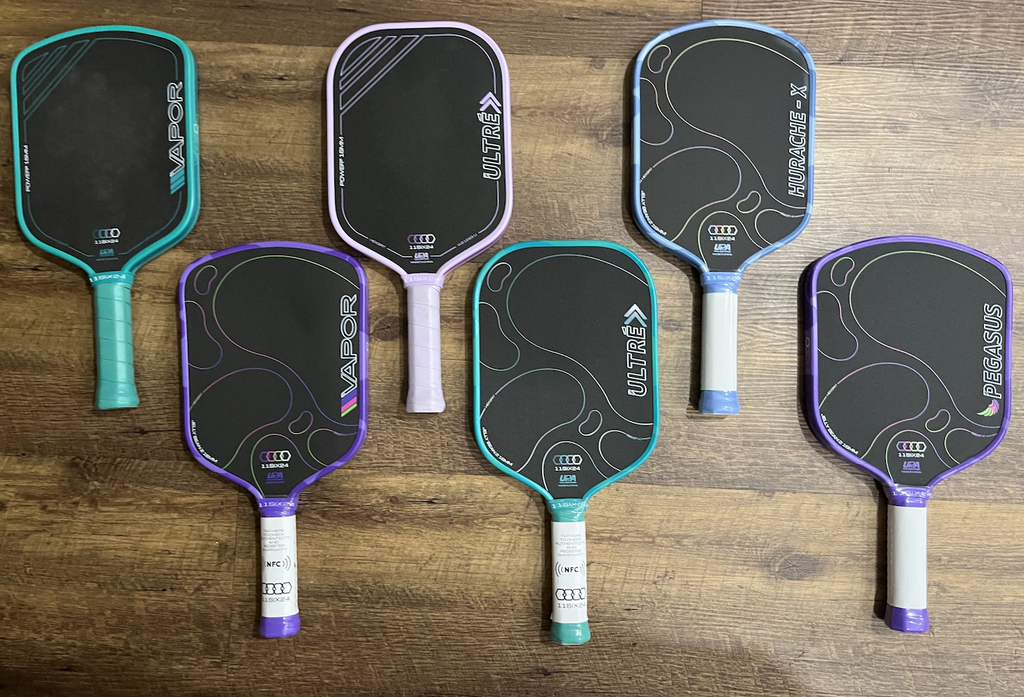
The Power 2 paddles have been some of my favorite 11six24 paddles recently. They have great grit, excellent power, and that premium Gen 4-style feel that makes them extremely fun to play with.
After playing with all four of the different Jelly Bean 2 paddle models and repeatedly switching between them and the Power 2 series, I started to realize that these paddles aren’t simply differentiated by price. They have very different personalities on the court.
The Power 2 is the more explosive option. The Jelly Bean 2 is the more controlled option. Both generate excellent spin, and depending on the type of player you are, I could easily see someone preferring the less expensive Jelly Bean 2.
Let’s cover first impressions, then playability, the cost considerations and how the best discount code BEPICKLEBALLER can take $10 off, and then which paddle I would choose.
First Impressions
11six24 continues to do a great job with first impressions, and the Jelly Bean 2 lineup is probably one of its most distinctive-looking releases.
The colors are excellent. You have options like Cosmic Grape, Island Punch, and Cornflower Blue, and the paddles simply look fun. I appreciate that because a lot of paddles are starting to look fairly similar: black carbon fiber faces, a small accent color, and roughly the same overall aesthetic.
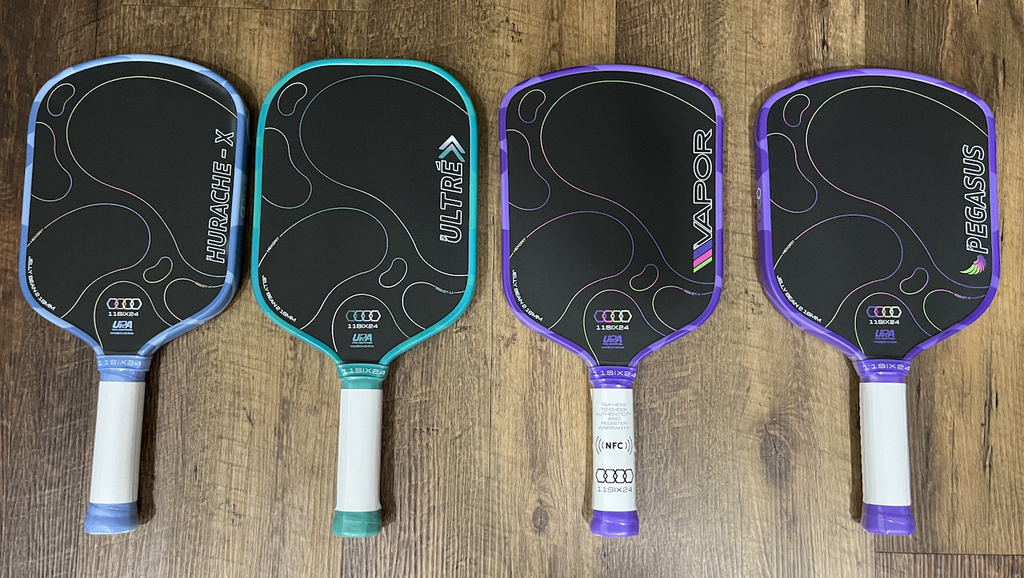
The Jelly Bean 2 paddles actually have some personality.
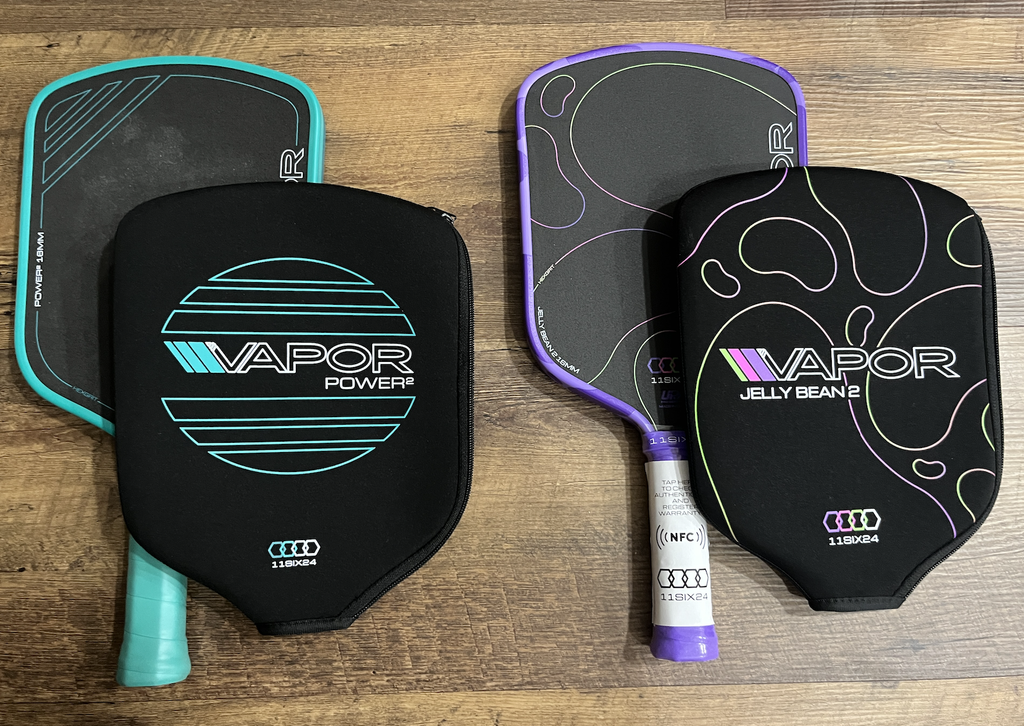
Each paddle also comes with a premium paddle cover with plenty of color and character. Personally, I prefer the Jelly Bean 2 covers to the Power 2 covers, although both are very nice.
Check out the Vapor Power 2 cover compared to the Vapor Jelly Bean 2 cover.
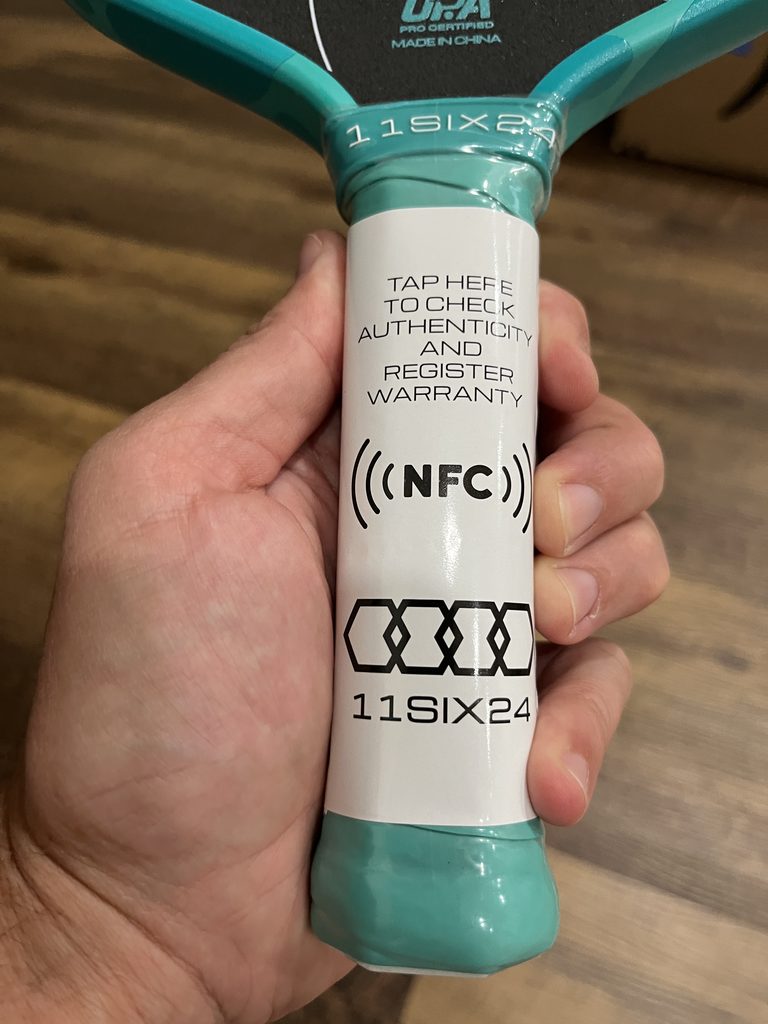
Another feature I like is the smart NFC tag embedded into the paddle for authenticity verification. With counterfeit and questionable paddle listings becoming more common, it’s a nice addition.
The surface may be even more impressive than the appearance. I’ve tested quite a few paddles with durable grit surfaces, and 11six24 continues to make some of the best-feeling grit I’ve used. When you run your hand across the paddle face, you can immediately tell that it is going to grab the ball.
One of the first physical differences I noticed between the Jelly Bean 2 and Power 2 paddles was weight. My Jelly Bean 2 paddles averaged around 8.2 ounces, while my Power 2 paddles averaged closer to 7.9 ounces.
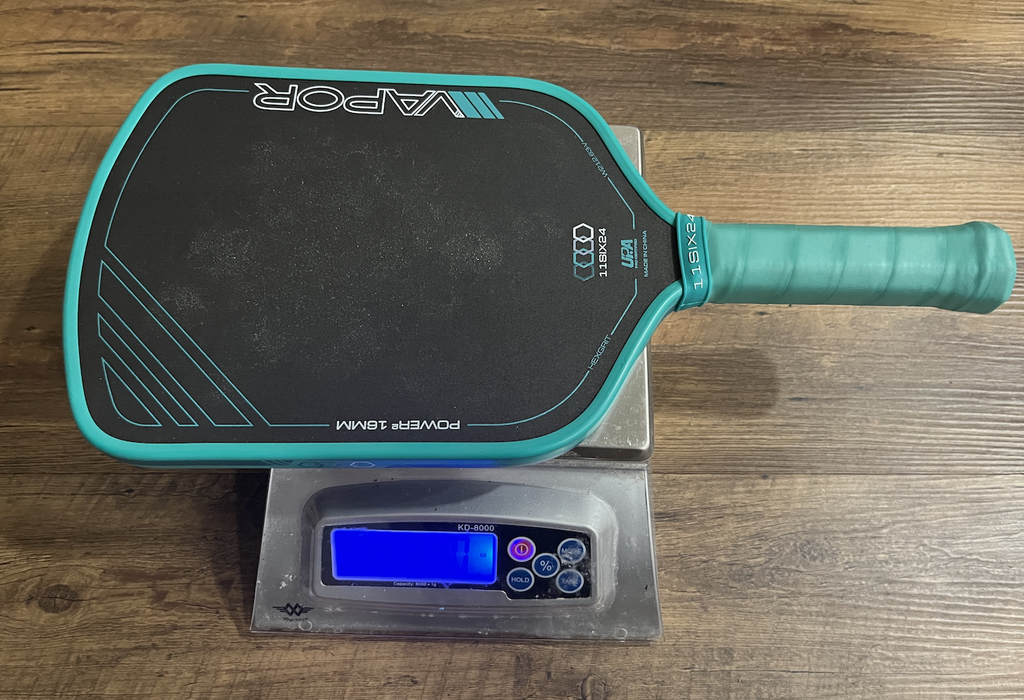
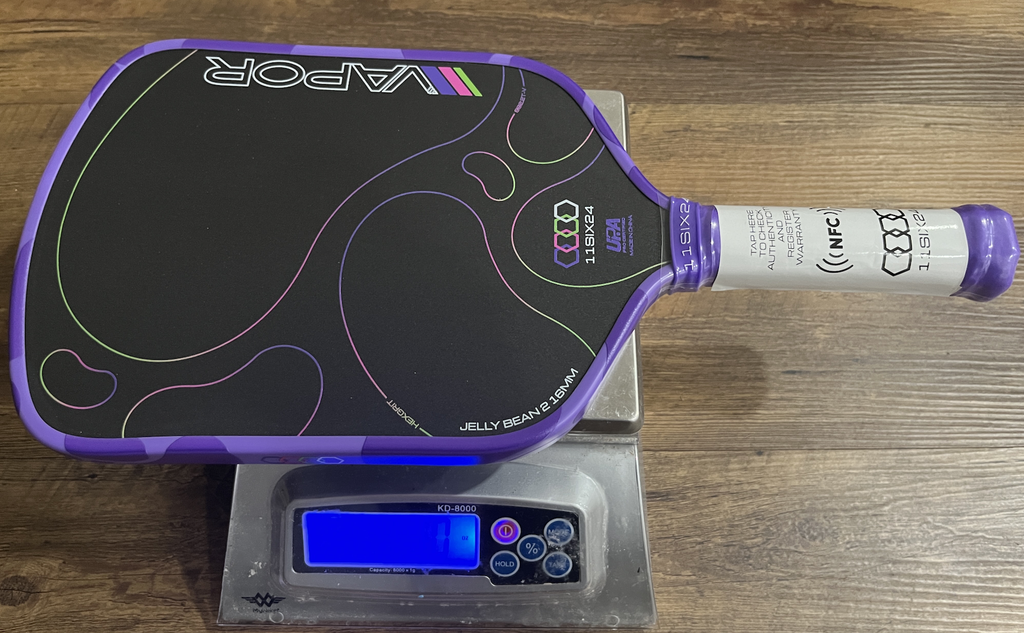
That’s not an enormous difference, but you can feel it. The Jelly Bean 2 feels slightly more substantial, while the Power 2 feels a little quicker and more explosive.
Playability
To compare the paddles as directly as possible, I switched between Jelly Bean 2 and Power 2 models from game to game and occasionally even switched paddles during the same game.
One of the first things I noticed was that the Power 2 paddles have a slightly more hollow feel than the Jelly Bean 2 paddles. They aren’t extremely hollow, but there is definitely more of that sensation compared with the more solid-feeling Jelly Bean 2.
The Power 2 series also has more immediate pop off the face. The ball comes off faster, and the paddle feels crisper when you’re attacking.
I noticed this most when moving from the baseline toward the kitchen and trying to hit a soft running dink. With the Power 2 paddles, I had to be slightly more careful with my hands because the ball wanted to jump off the face.
With the Jelly Bean 2 paddles, I felt like I had more margin for error. They felt more controlled, grounded, and easier to manage when I needed touch.
The simplest way to describe the difference is that the Power 2 feels more explosive, while the Jelly Bean 2 feels more controlled.
Those differences become even clearer when looking specifically at spin, power, and control.
Spin
Spin has been one of the most impressive aspects of both paddle lines, although that wasn’t entirely surprising considering my previous experience with the Power 2 series.
Both the Jelly Bean 2 and Power 2 generate excellent spin. There were multiple occasions when I hit knuckle serves or heavy-spin shots and opponents were visibly surprised that the ball landed in. The ball can move significantly through the air, which is exactly what I want to see from a paddle with a high-grit surface.
With the Power 2 series, the spin feels a little more aggressive because you’re combining that grit with additional pop and a crisper response. On topspin drives and serves, the ball jumps off the face and then dives hard.
The Power 2 gives you the feeling that if you really swing through the ball, the paddle is going to reward you with both pace and shape.
The Jelly Bean 2 paddles also generate fantastic spin, but the spin feels slightly easier to control. I felt comfortable shaping dinks, rolls, serves, and slices without the ball coming off quite as hot. That made the spin particularly useful during slower parts of the game.
If I’m ranking pure aggressive spin, I’d give a slight edge to the Power 2 series.
However, if I’m looking at usable spin throughout the entire court—especially for someone who values control and touch—the Jelly Bean 2 is extremely close.
If you want more aggressive spin with additional pace behind it, I’d choose the Power 2. If you want excellent spin that feels a little easier to shape and manage, I’d choose the Jelly Bean 2.
Power
Power is where the Power 2 series separates itself most clearly from the Jelly Bean 2.
That probably isn’t surprising considering it’s literally called the Power 2.
The Power 2 paddles have more pop, more crispness, and a more immediate response off the face. When I stepped into serves, drives, counters, or speedups, I could clearly feel the difference. The ball simply came off hotter.
It was especially noticeable when I had time to attack. If I received a ball around waist height, the Power 2 made it easier to quickly put pressure on my opponents.
The Jelly Bean 2 still has good power, but it isn’t as explosive, and I don’t think it’s designed to be.
Instead, the Jelly Bean 2 feels more like a controlled all-court paddle. You still have enough power to finish points, but you’re not getting the same immediate launch that you get from the Power 2 series.
For some players, that’s a disadvantage. For others, it’s exactly why they’ll prefer the Jelly Bean 2.
Extra power is fun until you start sending balls long. With the Power 2 series, I occasionally had to be a little more careful when hitting softer shots or transitioning toward the kitchen.
With the Jelly Bean 2, I could play more relaxed and still feel like the paddle was helping me keep the ball in the court.
For power, the winner is clearly the Power 2 series. However, the Jelly Bean 2 still offers plenty of power for most players, particularly if you already generate significant pace yourself.
Control
Control is where the Jelly Bean 2 impressed me the most and where I think it makes its strongest argument against the more expensive Power 2.
The Power 2 series is extremely fun, but it asks a little more from your hands. You have to be more intentional on drops, resets, and running dinks because the ball leaves the paddle faster.
The Jelly Bean 2 felt easier to manage in those situations.
When moving from the baseline into the kitchen, I had more confidence taking pace off the ball. Drops felt more natural, dinks were easier to shape, and resets felt less stressful.
That doesn’t mean the Power 2 has poor control. It doesn’t. The Power 2 paddles are still very playable, and once you adjust to the additional pop, you can absolutely control them.
But when comparing the two side by side, the Jelly Bean 2 gave me more forgiveness. It felt less jumpy and gave me slightly more margin when trying to execute softer shots.
For doubles players in particular, where touch, resets, and consistency become increasingly important, I think that difference matters.
Paddle shape also became important during my testing. The Ultre Jelly Bean 2 felt like the most well-rounded option for me. I really liked the new shape, and it offered a strong combination of control, spin, and enough power.
The Pegasus Jelly Bean 2, however, may have been the biggest surprise of the lineup. It might actually be my favorite widebody paddle I’ve ever played with.
I’ve played with quite a few widebody paddles, so that’s not something I say lightly. The forgiveness was excellent, the hand speed felt good, and the paddle simply made sense for doubles.
Overall, I’d give the Jelly Bean 2 series the edge in control.
The Power 2 wins power. The Jelly Bean 2 wins control. Spin is close enough that the better choice depends largely on whether you prefer aggressive spin paired with extra pace or slightly more controlled spin.
Cost Considerations
Price makes this comparison particularly interesting.
The Jelly Bean 2 costs $169.99 before a discount code. Using code BEPICKLEBALLER takes $10 off, bringing the price down to $159.99.
The Power 2 series starts at $209.99. The same BEPICKLEBALLER code takes $10 off, bringing the starting price down to $199.99.
That creates approximately a $40 difference between the Jelly Bean 2 and Power 2 series.
It’s a large enough gap that I think you should consider what you’re actually trying to get from your paddle rather than simply assuming the more expensive option is better.
If you want the more explosive paddle, the Power 2 may justify spending the additional money. If you prefer a more controlled paddle and would also like to save approximately $40, the Jelly Bean 2 becomes extremely compelling.
Both paddle lines feel premium. Both have excellent grit, both come with high-quality covers, and both include 11six24’s authenticity features.
The decision therefore comes down much more to playing style than overall build quality.
Which Paddle Should You Choose?
If your biggest priority is power, I would choose the Ultre Power 2 from the Power 2 series.
It gives you more pop, more pace, and a crisper response when attacking. If you like driving the ball, speeding up aggressively, countering hard, and generally playing an offensive style of pickleball, the Power 2 is probably going to feel more exciting.
During my testing, I also had the most success with the Ultre 2 shape, even though several shapes throughout the lineup are somewhat similar.
If your priority is control, I would lean toward the Jelly Bean 2 series.
The Jelly Bean 2 paddles still offer excellent spin, good power, and premium grit, but they’re easier to manage on touch shots, drops, resets, and transition play.
Within the Jelly Bean 2 lineup, I particularly like the Ultre Jelly Bean 2. It feels well-rounded, predictable, and easy to trust. For someone who wants one paddle capable of doing almost everything well, that would probably be my first choice.
The Pegasus Jelly Bean 2 is another standout. It’s my favorite widebody paddle I’ve played with so far. If you prefer widebody shapes, a large sweet spot, additional forgiveness, and a paddle particularly well suited for doubles, the Pegasus Jelly Bean 2 should be near the top of your list.
Ultimately, I don’t think the Jelly Bean 2 should be viewed simply as the cheaper alternative to the Power 2.
They’re designed for different players.
And considering the Jelly Bean 2 costs about $40 less, I think it makes an extremely strong case as one of the better values in the 11six24 lineup.
Leave a Reply