
This article may have affiliate links that help support this website. I earn a commission if you use my code, but it’s never expected and always appreciated.
The Selkirk Boomstick was released last year, so I knew right away that I had to get my hands on one and compare it to the Joola Pro IV pickleball paddle and the new Joola Pro V 2026 release.
You can call it the battle of the $300 paddles.
If you’ve been following the blog, you would know that I just competed the Joola Pro IV against a $50 budget and $5 cheap pickleball paddle. The results were surprising, so I was excited to compete that Selkirk Boomstick vs the Joola Pro IV.
Just for your context, Joola and Selkirk are both the top echelon of paddle brands, and the Selkirk Boomstick and Joola Perseus Pro IV and Pro V represent their most premium paddles.
The difference between the two paddle methodology started at the first impressions, but I’ll cover playability differences and how Selkirk separates itself from Joola especially by providing a coupon code INF-BALLER that provides bonus bucks on your purchase.
First Impressions
The Selkirk Boomstick destroyed the Joola Pro IV and V in first impressions.
Selkirk Boomstick Unboxing Experience
Firstly, the first thing I noticed was the black paper on top that felt like this paddle was gift wrapped.

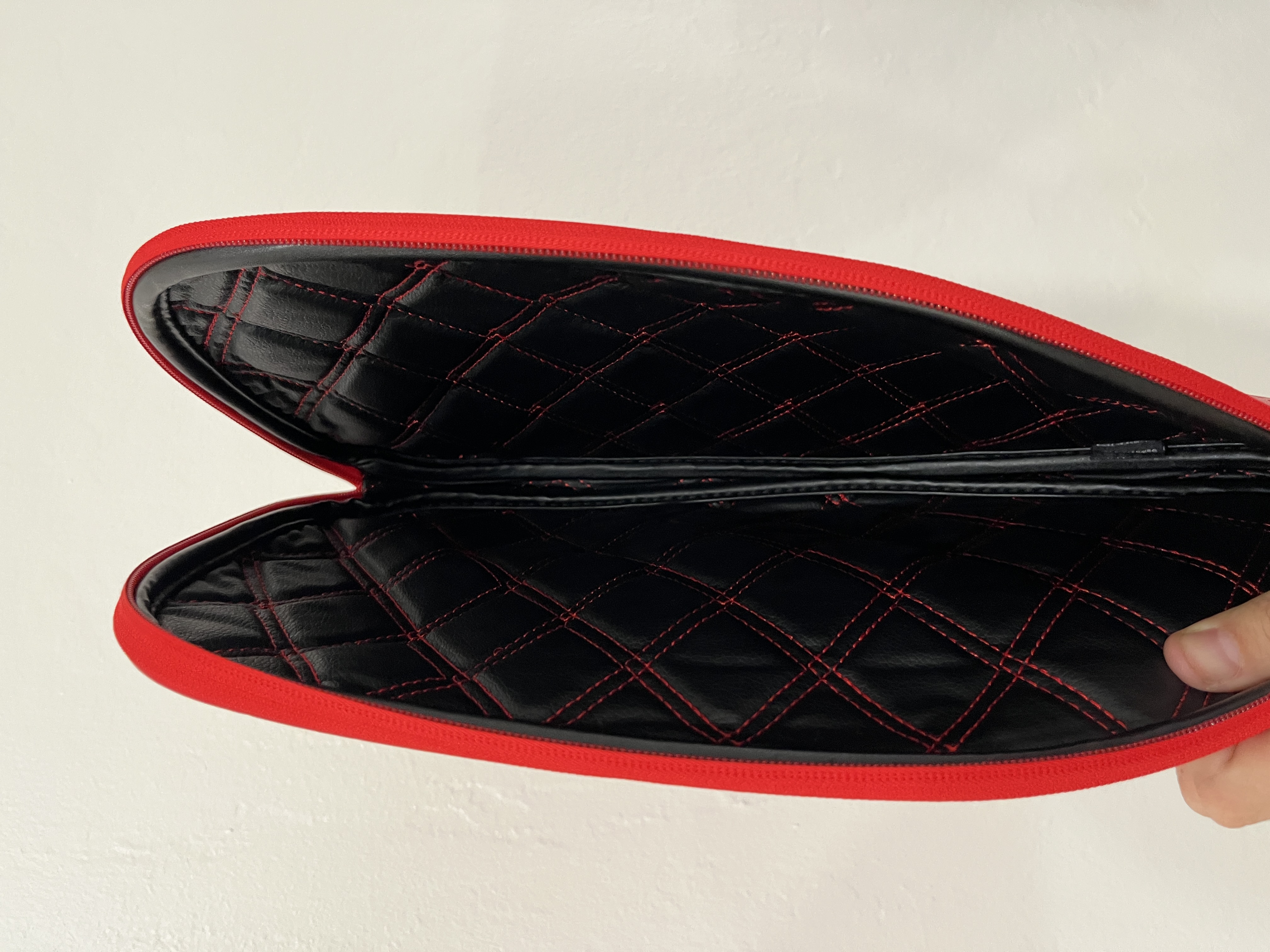
When you lift up the black paper, you see the the Boomstick’s paddle cover.

Immediately, the paddle cover stood out. In addition, a close family member was at my house for the Selkirk unboxing experience, and they kept commenting how well the paddle cover looked. My close family member knows nice things, so it was fun to see them provide so many kudos.
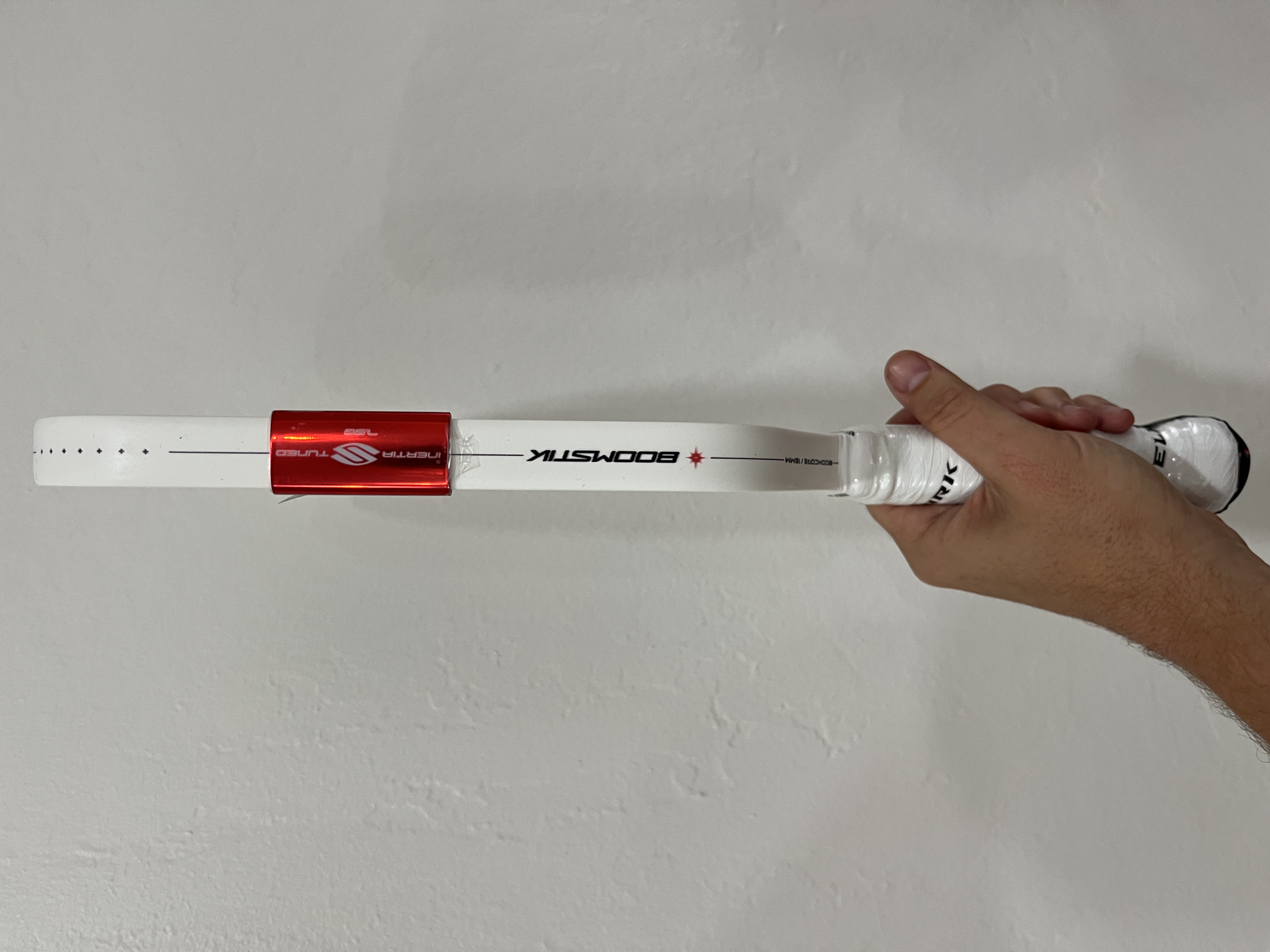
Finally, you see the paddle. I like how the Joola Perseus 4 looks, but I would argue that the Selkirk Boomstick looks nicer overall from the design perspective. The paddle has an elongated handle and is 16mm in paddle thickness.

Next, you turn the paddle to the side, and you see “inertia tuned” feature.
The Selkirk unboxing experience was incredible, but let’s see how Perseus 4 has done.
Joola Pro V First Impressions
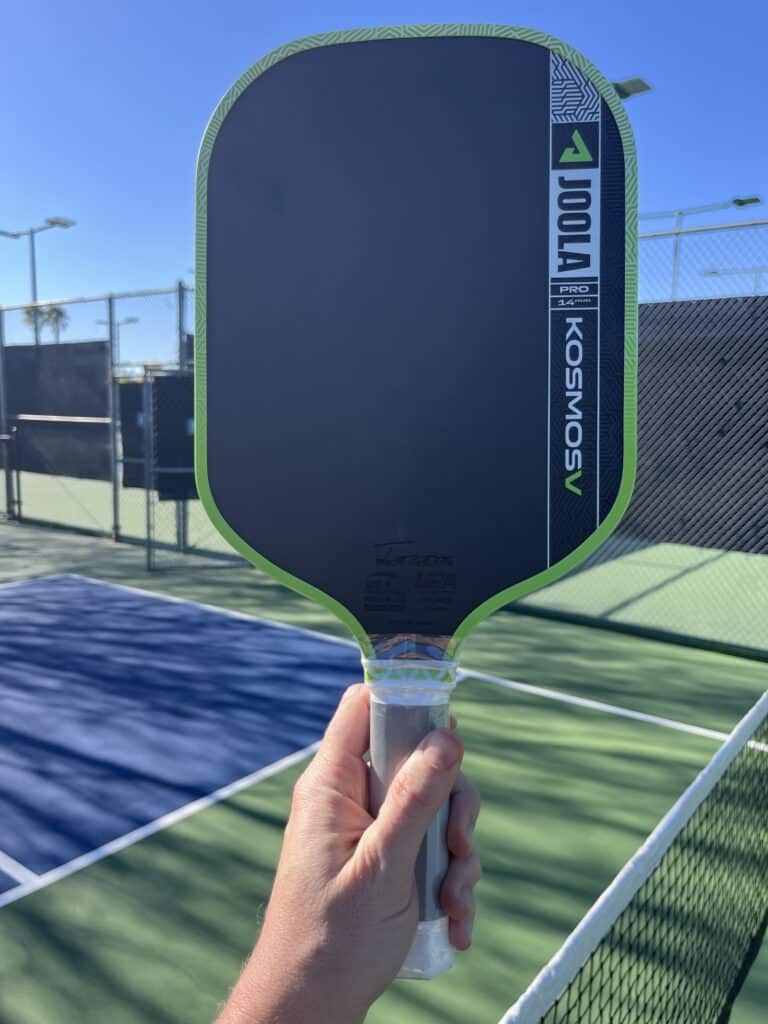
I was able to unwrap 3 different models of the Joola Pro V, including the Perseus, the new Kosmos shape and the Hyperion.
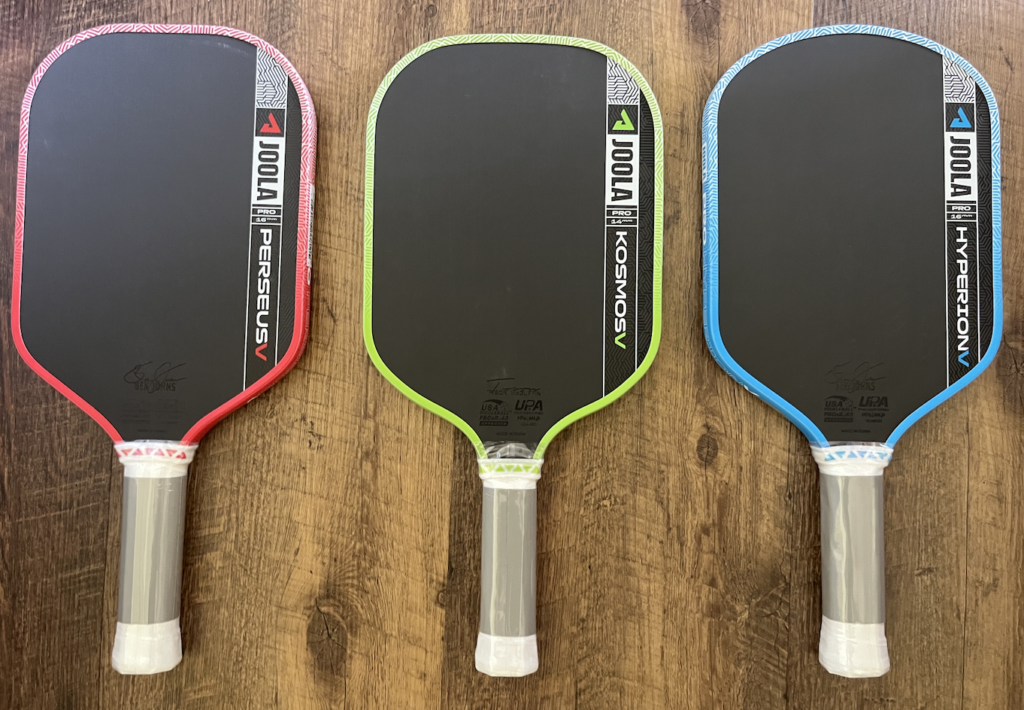
Honestly, I thought the paddles looked great out of the box, and you can notice right away that the paddles have decent grit although not the grit level of the new extra durable grit.
You also have the ability to register your device similar to the Pro IV, which I like that addition.
The Joola ProV is both UPA and USAP certified, something that you see the larger brands make sure to do.
Joola Perseus Pro 4 Unboxing Experience
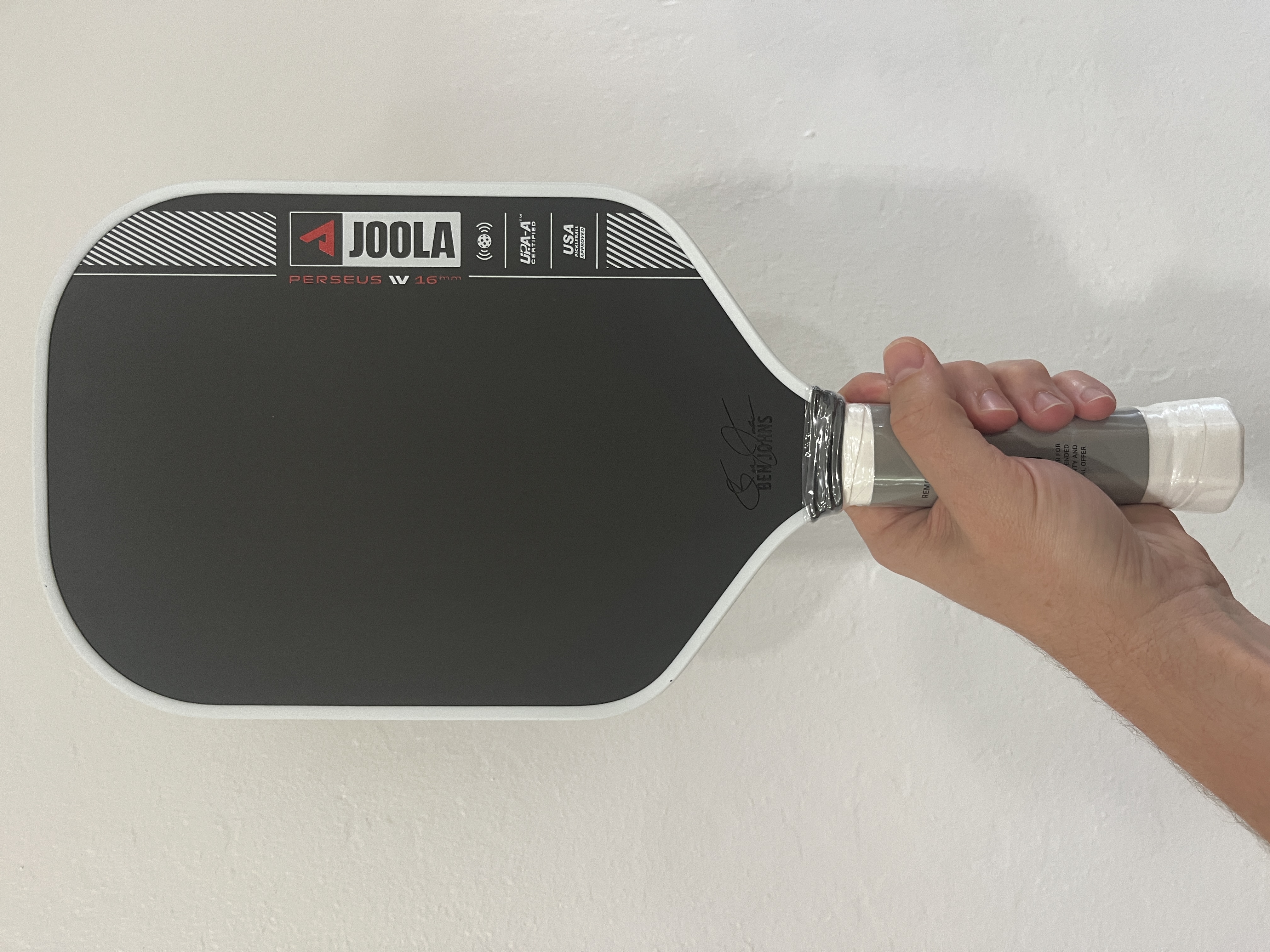
The Joola Perseus Pro 4 unboxing experience has definitely improved since my experience getting the Joola Ben Johns CFS16mm, but I still have a grip that a $300 paddle doesn’t come with a paddle cover.
Hopefully Selkirk’s raising the bar will mean that you get a paddle cover in future versions. That said, the Joola unboxing experience has improved. The paddle comes in a nicer, custom box as you can see with a window to the paddle.
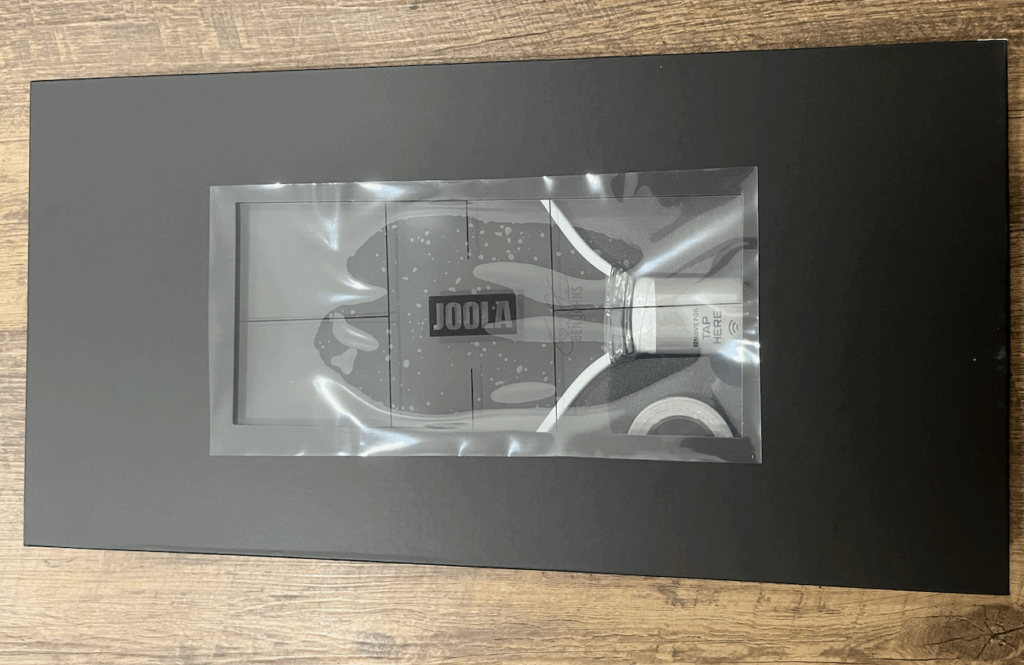
When you open the box, you’ll see a beautiful paddle.

The paddle also comes with a couple of accessories, which tend to be standard now with most quality paddles. You get stickers which is a nice touch.

The paddle itself feels great in your hands, and feels like the perfect measurments. I am planning to add some weight to sides and head of paddle, but it still feels solid out of the box.
Okay, let’s talk about playability of both the Selkirk Boomstick and Joola Perseus 4 as that’s what most important.
Playability
Given both of these are $300+ after tax, I have high standards in terms of how well a paddle plays. I am a bit more skeptical and give less forgiveness than my favorite $50 budget paddle.
Control
When I first tried the Selkirk Boomstick, I expected it to be a pure power paddle, but I was surprised by how much control it actually offered. The paddle has a crisp, solid feel that gives me instant feedback on every shot. I can tell right away whether I’ve hit the sweet spot, which helps me adjust during play. What stood out most to me was how stable it felt on blocks and counters, and the ball doesn’t twist off the face as much as I expected, even when I catch it slightly off-center.
That said, this paddle definitely rewards good technique. If I get lazy with my hands or push too hard on a drop, the ball can fly deeper than I want. It’s not as forgiving in the soft game as a true control paddle, but it’s much more predictable than most power-focused paddles I’ve used. Once I found the right touch, I could hit consistent dinks and drops without feeling like the paddle was fighting me.
Overall, I’d say the Boomstick offers a great mix of pop and precision. It gives me the confidence to attack hard but still lets me play controlled when I need to reset or slow things down. It’s not ideal for beginners, but for experienced players who want more control from a power paddle, I think it delivers that balance really well.
I would argue that the Joola Perseus offers solid control for those with the softest hands, but I have had trouble reeling in the wild stallion. Obviousl, some of the the best in the world use this paddle with solid control, so it’s possible.
Between the Selkirk Boomstick and the Joola Perseus IV, I lean toward the Boomstick having the edge in control for most players. The Boomstick’s stability and more dampened feel make it a bit more forgiving when dialing back pace, whereas the Perseus IV is a bit more aggressive, which great when you want to attack, but a little more demanding when you want to slow things down.
The Joola Pro V has definitely made a step up on control over the Pro IV. You get that more muted feeling with the paddle, and I appreciated that right out of the box as the Pro IV often felt wild in my hands.
Ranking:
- Joola Pro V 16MM
- Selkirk Boomstick
- Joola Pro IV
Power
When I step up with the Selkirk Boomstik, I instantly feel its puckerpunch with the full-foam core and side weighting combine to deliver a powerful response that lets me drive hard without feeling like I have to muscle every shot. I received a bunch of compliments for my strong serve and volley speed, giving some explosiveness on my drips.
With the Joola Perseus Pro IV, I feel potent energy especially in its 16mm version it has that “pop” character on contact that makes attacking comfortable. I would argue that this paddle has so much power and force that it can make it difficult to control. In my opinion, I have had some of my hardest serves and returns with the Joola Pro IV.
After playing with the Selkirk Boomstick and the Joola Pro IV more, I would argue that the Boomstick has more controlled power and the Joola Pro IV may have more raw power. I prefer controlled power.
In addition, I would argue that the Joola Pro V has significantly less power than the Pro IV although sufficient power. It makes up for that fact in the control category.
Winner:
- Selkirk Boomstick
- Joola Pro IV
- Joola Pro V
Spin
Both the Boomstick and Perseus 4 have incredible spin. How incredible?
Matt’s pickleball measured the Boomstick at an impressive 2294 revolutions per minute (RPM) (source) while Pickleball studio measured the Joola Perseus Pro 4 at 2048 RPM (source).
Personally, I got incredible spin with my knuckle serve with both the Boomstick and Perseus 4, and I was able to get really solid top spin and slice on both paddles.
The Joola Pro V also has really solid spin. I noticed that on my knuckle serves and top spin. That said, I believe you generate less power with the Joola Pro V, so it can be harder to get the same spin combination that you get with the Boomstick and Joola Pro IV.
Ranking:
- Selkirk Boomstick
- Joola Pro IV
- Joola Pro V
Context: If I had to pick between them, I believe the Selkirk Boomstik has a slight edge in raw spin capability, especially on aggressive drives and slices. Its face texture combined with its measured RPM data give it an advantage, though in actual match play the difference may feel subtle depending on how clean your contact is.
Cost Considerations
The Selkirk Boomstick is $333, but you can use the best Selkirk influencer discount code INF-BALLER that provides bonus bucks on purchase that can be used for other gear. That’s pretty incredible considering that Selkirk also has one of the most generous warranty policies I have ever seen. 2 friends mentioned just how amazing their Selkirk purchasing experience has been. You cannot purchase the Boomstick on Amazon, but mine came quite quickly, and Selkirk has a great return policy.
The Joola Pro V is $299.95, and unfortunately there is not discount code for the Joola Pro V. I purchased my Joola paddles generally on Amazon, so I could take advantage of the no questions 30 day return policy, which I did not use as I kept the paddle.
The Joola Pro IV is $249.95, and unfortunately there is not discount code for the Joola Pro IV. That said, you get the Amazon 30 day return policy which I appreciate.
How Many Selkirk Bonus Bucks Do You Get?
I just tested the coupon code INF-BALLER and confirmed that you get $40 in bonus bucks upon purchase of the Selkirk Boomstick, including the new 1776 limited edition Boomstick.
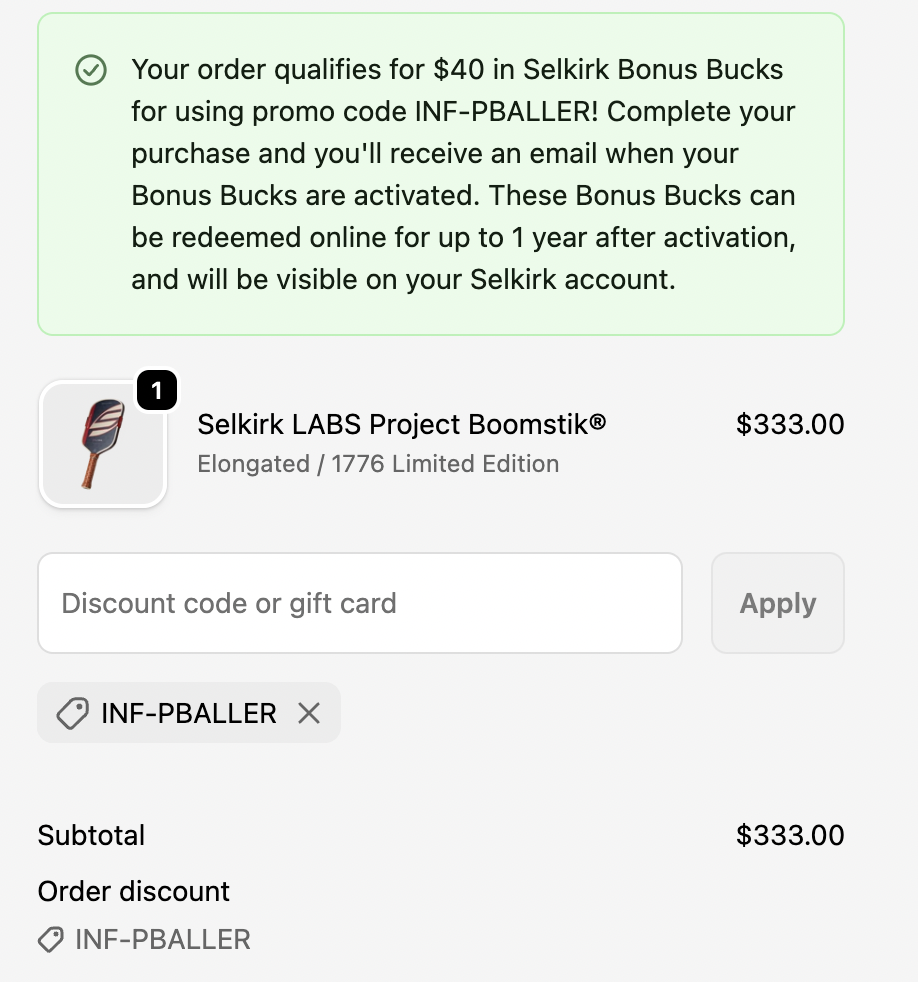
Bonus bucks can use redeemed online, similar to a gift card for up to 1 year after activation.
Which Would I Choose?
Overall, I would choose the Selkirk Boomstick with the Joola Pro V in second place and the Joola Pro IV in third place. Selkirk provides the best paddle cover on the market, and with INF-BALLER, you get $40 in bonus bucks, which you could argue makes the price similar to the Joola Pro V that doesn’t come with a cover.
The Joola Pro V is a great option too. The model I liked the best was surprisingly the Kosmos, and I outlined all of that and more in my comprehensive Joola Pro V review article.
The Joola Perseus 4 has upped its game recently from some of the older models by putting the paddle in a box and adding extra grip tape, but the paddle still does not come with a complimentary paddle cover, and the experience still doesn’t feel like $250 even after the improvements.
I would argue that both of these paddles are for advanced players for 4.0 and greater.
Where to buy, in the order I ranked them:
- Selkirk Boomstick – use code INF-BALLER for $40 in bonus bucks
- Joola Pro V
- Joola Perseus Pro IV
Leave a Reply